THE GLP-1 EFFECT: WHY BLOOD SUGAR CONTROL IS THE NEW ANTI-AGING STRATEGY
Modern longevity science is redefining how we understand aging.
Beyond genetics and lifestyle, one of the most influential - and often overlooked - factors is metabolic regulation.
At the center of this shift is a key hormone: GLP-1 (Glucagon-Like Peptide-1).
Originally studied for its role in glucose control, GLP-1 is now recognized as a powerful modulator of inflammation, cellular energy, and tissue resilience - all of which directly influence how we age.
What Is GLP-1 - and Why Does It Matter?
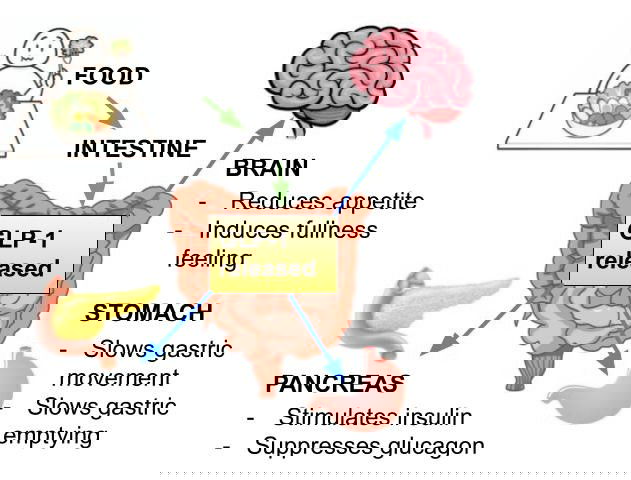
GLP-1 is a hormone released in response to food intake, particularly nutrients that require metabolic processing. It is a peptide hormone generated through the enzymatic breakdown of proglucagon. It is synthesized in L-cells located in the intestinal mucosa, α-cells found in the pancreatic islet, and neurons residing in the nucleus of the solitary tract
Its primary roles include:
- regulating blood sugar levels
- enhancing insulin sensitivity
- slowing gastric emptying
- promoting satiety
However, its impact extends far beyond metabolism. GLP-1 influences pathways that are central to longevity:
- reducing chronic inflammation
- supporting mitochondrial function
- improving metabolic efficiency
These processes are directly linked to how the skin and the body age over time.
Blood Sugar, Glycation, and Skin Aging
One of the most significant consequences of poor metabolic control is glycation - a process in which excess glucose binds to proteins such as collagen.
This leads to:
- stiff, less functional collagen fibers
- loss of elasticity
- accelerated wrinkle formation
- dull, fatigued skin appearance
In parallel, unstable blood sugar levels contribute to:
- increased oxidative stress
- chronic low-grade inflammation (inflammaging)
- impaired cellular repair
The result is not only metabolic dysfunction, but visible aging.
GLP-1 as a Longevity Signal
Optimizing GLP-1 activity creates a metabolic environment that supports long-term health.When functioning effectively, GLP-1 contributes to:
- more stable blood glucose levels
- reduced inflammatory signaling
- improved energy availability at the cellular level
- better appetite regulation
This translates into:
- improved metabolic resilience
- enhanced tissue repair
- slower biological aging
Natural Ways to Support GLP-1
While pharmacological approaches exist, lifestyle and nutritional strategies can significantly enhance natural GLP-1 secretion.
1. Protein-First Nutrition
Consuming protein early in meals stimulates GLP-1 release and stabilizes blood sugar.
2. Fiber and Polyphenols
Vegetables, legumes, berries, and green tea support gut health and GLP-1 production.
3. Meal Structure
Eating in a structured way (protein → fiber → carbohydrates) improves metabolic signaling.
4. Physical Activity
Even light movement enhances insulin sensitivity and GLP-1 response.
5. Sleep and Circadian Rhythm
Disrupted sleep negatively affects metabolic hormones, including GLP-1. So, quality sleep has a huge impact on metabolism and GLP-1 level.
From Metabolism to Skin Longevity
The connection between metabolic health and skin quality is increasingly evident.
Stable blood sugar and efficient metabolic signaling:
- protect collagen integrity
- reduce inflammation
- support cellular regeneration
- improve overall skin resilience
This represents a shift in perspective:
Anti-aging is no longer limited to topical or procedural interventions - it begins with metabolic balance.
A New Direction in Aesthetic Medicine
As our understanding evolves, Aesthetic Medicine is expanding beyond surface-level correction toward biology-driven strategies.
Supporting GLP-1 activity and metabolic health becomes part of a broader framework aimed at:
- preserving tissue function
- enhancing regenerative capacity
- maintaining long-term skin vitality
Final Insight
True anti-aging begins where metabolism, inflammation, and cellular function intersect - long before changes become visible on the surface.