Magnesium: The Mineral Your Body Uses Everywhere
Why this essential mineral matters for energy, muscles, nerves, metabolism, bones - and healthy aging
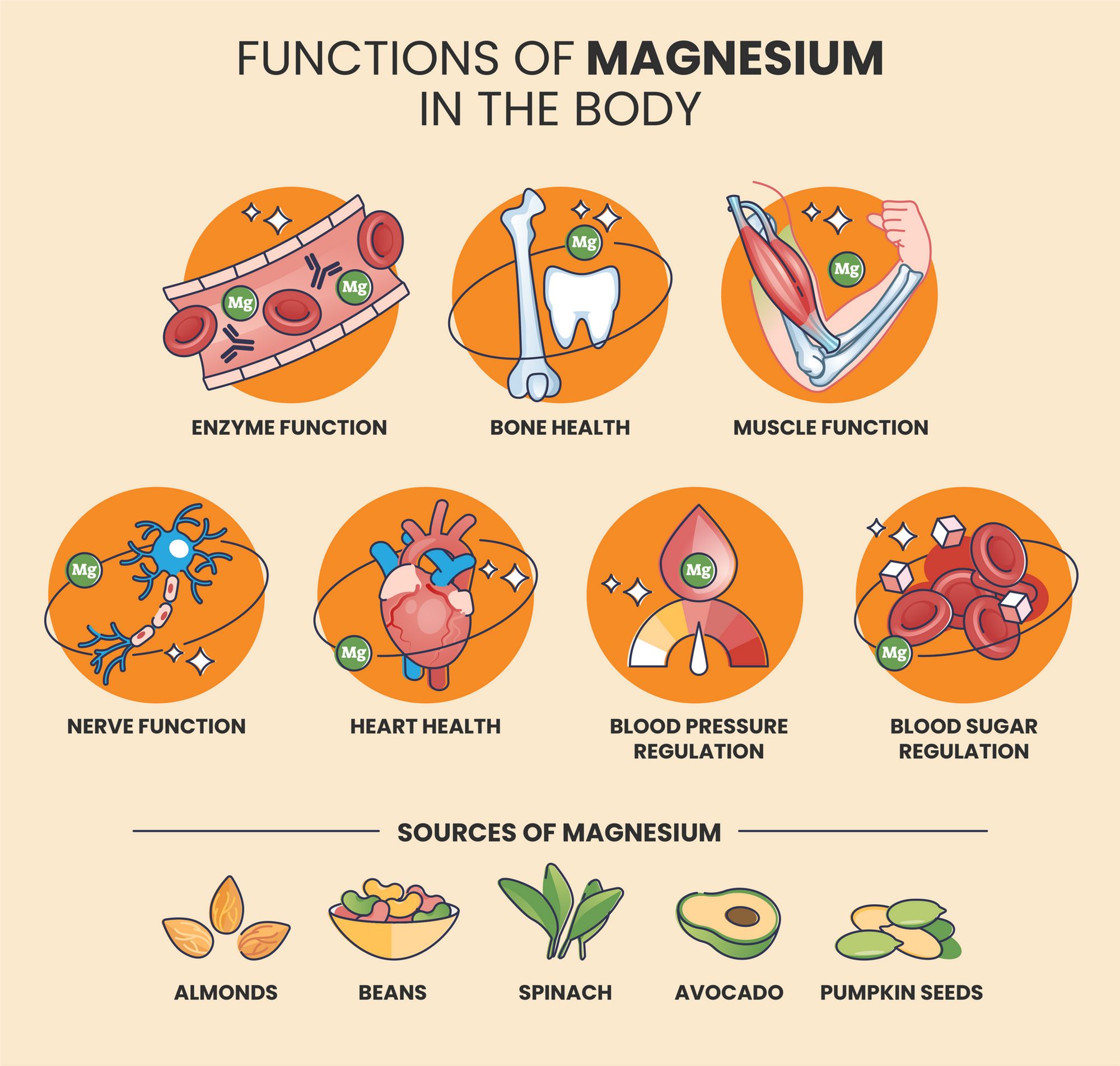
Magnesium is one of those nutrients we rarely think about until we start paying attention to nutrition and healthy aging. It does not have the glamour of Collagen, the popularity of Vitamin D, or the reputation of Omega-3 fatty acids. Yet Magnesium is involved in more than 300 enzyme systems throughout the body, helping regulate processes as diverse as energy production, protein synthesis, nerve transmission, muscle function, blood glucose control, blood pressure regulation and bone metabolism. In other words, Magnesium is not responsible for one particular function. It is part of the machinery that allows many functions to happen. And that is exactly why Magnesium deserves a place in any serious conversation about nutrition, metabolic health and healthy aging.
First: What exactly is Magnesium?
Magnesium is an essential mineral and electrolyte. Your body cannot manufacture it, so you have to obtain it from food and, when appropriate, supplements. Most of the Magnesium in your body is not circulating freely in your blood. Approximately half is stored in bone, while much of the remainder is found inside cells and tissues. Only a very small proportion circulates in the bloodstream.This distribution is important because it explains one of the less intuitive facts about Magnesium:
A normal blood magnesium result does not necessarily tell the whole story about your body's Magnesium status.
The body works hard to maintain Magnesium concentration in the blood, including by reducing Magnesium losses through the kidneys when intake is low. Consequently, Serum Magnesium is useful clinically, but it is not a perfect measure of Total-Body Magnesium stores.
The easiest way to remember Magnesium
Think of Magnesium as the body's “behind-the-scenes mineral.” It doesn't perform one spectacular task. Instead, it helps hundreds of biochemical processes work properly.
Four areas are particularly important to remember:
ENERGY
Magnesium is essential for the body's handling of ATP - the molecule used to power cellular processes.
NERVES
It participates in nerve transmission and regulation of neuromuscular activity.
MUSCLES
It helps regulate muscle contraction and relaxation.
METABOLISM
It is involved in protein synthesis, DNA and RNA synthesis, glucose metabolism and numerous enzyme reactions. And there is more: Magnesium also contributes to normal heart rhythm, vascular tone, bone health and regulation of calcium and potassium transport across cell membranes.
Where does magnesium actually work?
This is where Magnesium becomes particularly interesting.
1. Inside the cell: energy production
One of magnesium's most important roles is connected with ATP, the molecule often described as the body's cellular energy currency.ATP does not function in isolation. Magnesium binds with ATP and helps make it usable in many enzyme-dependent reactions. Magnesium is therefore involved in both energy production and energy utilization, including pathways such as glycolysis and oxidative phosphorylation.This does not mean that taking Magnesium automatically gives you more energy. Rather, it means that adequate Magnesium is necessary for the biochemical machinery involved in energy metabolism to function normally.
2. In your nervous system
Magnesium is involved in nerve transmission and in the movement of electrolytes such as Calcium and Potassium across cell membranes. This is important because nerve cells communicate through precisely controlled electrical and chemical signals. Magnesium therefore contributes to normal:
- nerve transmission
- neuromuscular function
- cellular signaling
- muscle relaxation
- cardiac electrical activity
This is one reason Magnesium is often discussed in relation to muscle cramps, although cramps can have many different causes and Magnesium supplementation is not a universal solution.
3. In your muscles
Muscles require Calcium to contract - but Magnesium participates in the processes that regulate contraction and relaxation. Magnesium also helps maintain the normal movement of Calcium and Potassium across cell membranes. The result is a delicate balance between minerals rather than one mineral acting alone. This is why I prefer to think of minerals as an electrolyte network, rather than isolated supplements.
4. In Glucose and Insulin metabolism
Magnesium is involved in enzymes and cellular processes that regulate blood glucose. Observational research consistently finds associations between higher dietary Magnesium intake and a lower risk of developing type 2 diabetes, although this does not mean that Magnesium supplements prevent or treat diabetes on their own. This is particularly interesting from a healthy-aging perspective because metabolic health and skin health are not completely separate subjects. The same organism that regulates glucose, inflammation, energy and vascular function is also the organism maintaining your skin youthful.
Healthy aging is systemic.
5. In the cardiovascular system
Magnesium contributes to normal vascular tone, blood pressure regulation and cardiac electrical activity. Some studies suggest that Magnesium supplementation can produce a small reduction in blood pressure, particularly in people whose intake is low, but Magnesium should not be presented as a substitute for evidence-based treatment of hypertension. Again, context matters. Adequate Magnesium is part of a healthy nutritional pattern. It is not a magic pill.
6. In your bones
Magnesium is involved in bone structure and mineral metabolism. Aproximately half of the body's Magnesium is stored in bone, and Magnesium participates in the regulation of Calcium and other minerals important for skeletal health.This becomes increasingly relevant as we age, particularly because maintaining bone health requires much more than Calcium alone. A healthy skeletal strategy includes: Protein + Calcium + Vitamin D + Magnesium + resistance exercise + adequate overall nutrition.
How much magnesium do we actually need?
For adults, recommended intake depends on age and sex.
For women:
| Age | Recommended daily intake |
|---|---|
| 19–30 years | 310 mg |
| 31–50 years | 320 mg |
| 51+ years | 320 mg |
For men, the corresponding recommendations are 400 mg/day for ages 19–30, 420 mg/day for ages 31–50 and 420 mg/day from age 51 onward.
These numbers refer to total Magnesium intake from food, beverages and supplements, not the amount you should automatically take as a supplement.And this distinction is important.
The best source of magnesium? Food.
For most people, the first strategy should be to build a magnesium-rich diet rather than immediately reaching for a supplement .The richest sources tend to be:
Seeds
- pumpkin seeds
- chia seeds
- sesame seeds
Nuts
- almonds
- cashews
- peanuts
Legumes
- black beans
- kidney beans
- edamame
- lentils
Green vegetables
- spinach
- other dark leafy greens
Whole grains
- oats
- brown rice
- whole-grain products
And several other foods contribute meaningful amounts.
A practical Magnesium food list
Here are some useful examples based on standard serving sizes:
| Food | Approx. magnesium |
| Pumpkin seeds, 28 g | 156 mg |
| Chia seeds, 28 g | 111 mg |
| Almonds, 28 g | 80 mg |
| Cooked spinach, ½ cup | 78 mg |
| Cashews, 28 g | 74 mg |
| Peanuts, ¼ cup | 63 mg |
| Black beans, cooked, ½ cup | 60 mg |
| Edamame, cooked, ½ cup | 50 mg |
| Peanut butter, 2 tbsp | 49 mg |
| Baked potato with skin, ~100 g | 43 mg |
| Brown rice, cooked, ½ cup | 42 mg |
| Plain low-fat yogurt, 1 cup | 42 mg |
| Oatmeal, 1 packet | 36 mg |
| Kidney beans, ½ cup | 35 mg |
| Banana, 1 medium | 32 mg |
| Milk, 1 cup | 27 mg |
| Avocado, ½ cup | 22 mg |
| Chicken breast, 85 g cooked | 22 mg |
Values vary according to food variety, preparation and serving size, but the pattern is clear: nuts, seeds, legumes, whole grains and leafy greens are the Magnesium champions.
A simple way to increase your Magnesium intake
You don't necessarily need to overhaul your diet. Try building one or two magnesium-rich foods into your day.
For example:
Breakfast:
Oats + chia seeds + almonds
Lunch:
Large green salad + beans or lentils
Snack:
A small portion of almonds or pumpkin seeds
Dinner:
Leafy greens + legumes or whole grains
This approach has another advantage: magnesium-rich foods often bring fiber, potassium, polyphenols, plant protein and other micronutrients with them.
That's one reason I generally prefer food-first nutrition.
But can you be low in Magnesium?
Yes. True symptomatic Magnesium deficiency is relatively uncommon in otherwise healthy people, because the kidneys can reduce Magnesium losses when intake falls. However, inadequate intake is much more common than severe deficiency, and certain conditions and medications can increase the risk of Magnesium depletion.
People at higher risk include those with:
- gastrointestinal disorders that impair absorption
- prolonged diarrhea or malabsorption
- type 2 diabetes
- alcohol dependence
- certain medication exposures
- older adults
Long-term use of some proton-pump inhibitors can also contribute to low magnesium levels in susceptible people. Certain diuretics can increase magnesium loss through the urine.
What can Magnesium deficiency look like?
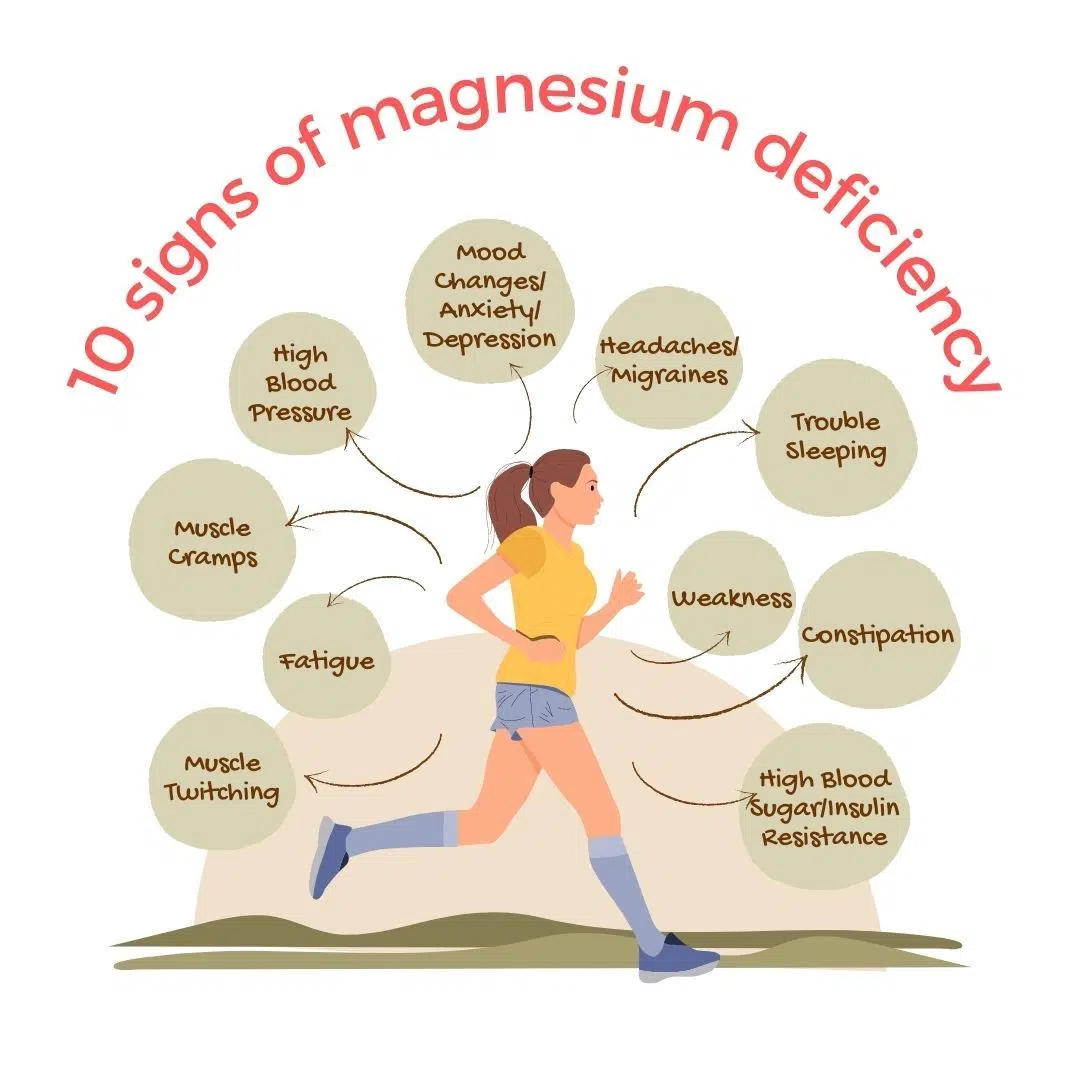
Early or mild deficiency can be difficult to recognize because the symptoms are nonspecific.
Possible symptoms include:
- loss of appetite
- nausea
- fatigue
- weakness
More significant deficiency may produce:
- numbness or tingling
- muscle contractions or cramps
- seizures
- abnormal heart rhythms
- disturbances in Calcium and Potassium levels
Severe Magnesium deficiency requires medical attention.
And importantly: Having one of these symptoms does not mean you are Magnesium deficient.
Fatigue, cramps, poor sleep and weakness have many possible causes.
When does supplementation make sense?
This is where a little nuance is important. Magnesium supplementation can make sense when:
1. Dietary intake is consistently low
If your diet contains very few nuts, seeds, legumes, whole grains and leafy greens, increasing magnesium-rich foods may be the first step.
2. There is a known or suspected deficiency
This should be evaluated in the appropriate clinical context.
3. There is an increased risk of Magnesium depletion
Certain gastrointestinal conditions and medications can increase the risk.
4. A healthcare professional recommends supplementation
Especially when magnesium is being used alongside other medications or for a specific clinical purpose.The goal should not be:
“Everyone should take magnesium.”
The better question is:
“Does this person have a reason to supplement, and what form and dose make sense?”
Which form of Magnesium is best?
This is one of the most confusing parts of the supplement aisle. You may see:
- Magnesium citrate
- Magnesium glycinate
- Magnesium oxide
- Magnesium chloride
- Magnesium lactate
- Magnesium malate
- Magnesium aspartate
They are not interchangeable in terms of absorption, tolerability and intended use .According to the NIH Office of Dietary Supplements, Magnesium forms such as citrate, chloride, lactate and aspartate tend to have higher bioavailability than Magnesium oxide and Magnesium sulfate.

Magnesium oxide
It contains a relatively high percentage of elemental Magnesium, but its absorption is comparatively poor and it is more likely to have a laxative effect.
Magnesium citrate
Generally well absorbed and commonly used. Because it can draw water into the intestine, it may loosen stools.
Magnesium glycinate
Frequently chosen for its generally good gastrointestinal tolerability. It is a Magnesium salt bound to the amino acid Glycine.
Magnesium chloride
Another relatively well-absorbed form.
The important point is not to choose a form simply because its label contains the word “premium.”
Look at the amount of elemental Magnesium and consider the purpose, absorption and tolerability.
One important label-reading trick
A magnesium supplement might say:
Magnesium glycinate 1,000 mg
That does not necessarily mean that you are receiving 1,000 mg of elemental Magnesium. Supplement labels generally declare the amount of elemental Magnesium, which is the number that matters when calculating your intake. So don't compare products based only on the weight of the Magnesium compound.
How much should you supplement?
This is where more is definitely not better. For adults, the U.S. National Academies' tolerable upper intake level for Magnesium from supplements and medications is 350 mg/day. Importantly, this upper limit does not apply to Magnesium naturally present in food. Why? Because excessive supplemental Magnesium commonly causes:
- diarrhea
- nausea
- abdominal cramping
Very high amounts can cause much more serious toxicity, particularly when kidney function is impaired. Therefore, a supplement containing 200–300 mg of elemental magnesium is not automatically “better” than one containing less.
The appropriate dose depends on the person and the reason for supplementation.
What about taking Magnesium in the evening?
You will often hear that Magnesium should always be taken before bed because it “helps you sleep.” The reality is more nuanced. Magnesium is involved in neuromuscular and nervous-system function, but the evidence for Magnesium supplements as a universal sleep treatment is not strong enough to justify presenting it as a guaranteed sleep aid. If someone finds an evening dose comfortable and useful, that is reasonable. But the fundamental reason to take Magnesium should be adequate magnesium intake and an appropriate clinical rationale, not a promise of instant better sleep.
Magnesium and other minerals: think balance, not competition
Magnesium does not operate alone. It interacts closely with other electrolytes and minerals, particularly:
- calcium
- potassium
- sodium
Magnesium helps regulate the movement of calcium and potassium across cell membranes, influencing nerve impulses, muscle contraction and cardiac function.This is another reason why taking isolated, high-dose minerals without considering the overall diet is rarely the smartest approach.
Magnesium and medications: an important caution
Magnesium supplements can interfere with the absorption of some medications.For example, magnesium can reduce absorption of certain:
- antibiotics, including tetracyclines and quinolones
- oral bisphosphonates used for osteoporosis
Magnesium status can also be affected by some diuretics and long-term proton-pump inhibitor therapy.
If you take prescription medication regularly, it is worth checking with your physician or pharmacist before starting a Magnesium supplement.
So, should you take Magnesium?
There is no universal yes or no. Instead, ask yourself four questions:
1. Does my diet regularly contain magnesium-rich foods?
2. Do I have a medical condition or medication exposure that increases my risk of magnesium depletion?
3. Do I have a specific reason to supplement?
4. Am I choosing an appropriate form and dose rather than simply taking “more”?
If your diet is already rich in magnesium and there is no specific indication for supplementation, you may not need a supplement at all.
The Magnesium Rule I Like
Rather than thinking:
“I need to take Magnesium.”
Think:
“I need to make sure my body has enough Magnesium to do its job.”
That changes the whole approach. Start with food. Assess the context. Supplement when there is a good reason. And remember that Magnesium is not a standalone wellness hack. It is one component of a much larger system involving nutrition, movement, sleep, metabolic health and healthy aging.
The Take-Home Message
If you remember only five things about Magnesium, remember these:
1. Magnesium is an essential mineral involved in more than 300 enzyme systems.
2. It is fundamental to energy metabolism, protein synthesis, DNA/RNA synthesis and cellular function.
3. It helps regulate nerves, muscles, electrolytes and normal heart function.
4. The best dietary sources include seeds, nuts, legumes, leafy greens and whole grains.
5. Supplements can be useful - but more is not better, and the form, dose, medical context and medication interactions matter.
Magnesium isn't a miracle mineral. It is something much more interesting: a quiet, essential part of the machinery that keeps your body working.
Medical note
This article is intended for educational purposes and does not replace individualized medical advice. If you have kidney disease, significant gastrointestinal disease, a diagnosed electrolyte abnormality, or take prescription medication regularly, discuss magnesium supplementation with your physician or pharmacist before starting it.